
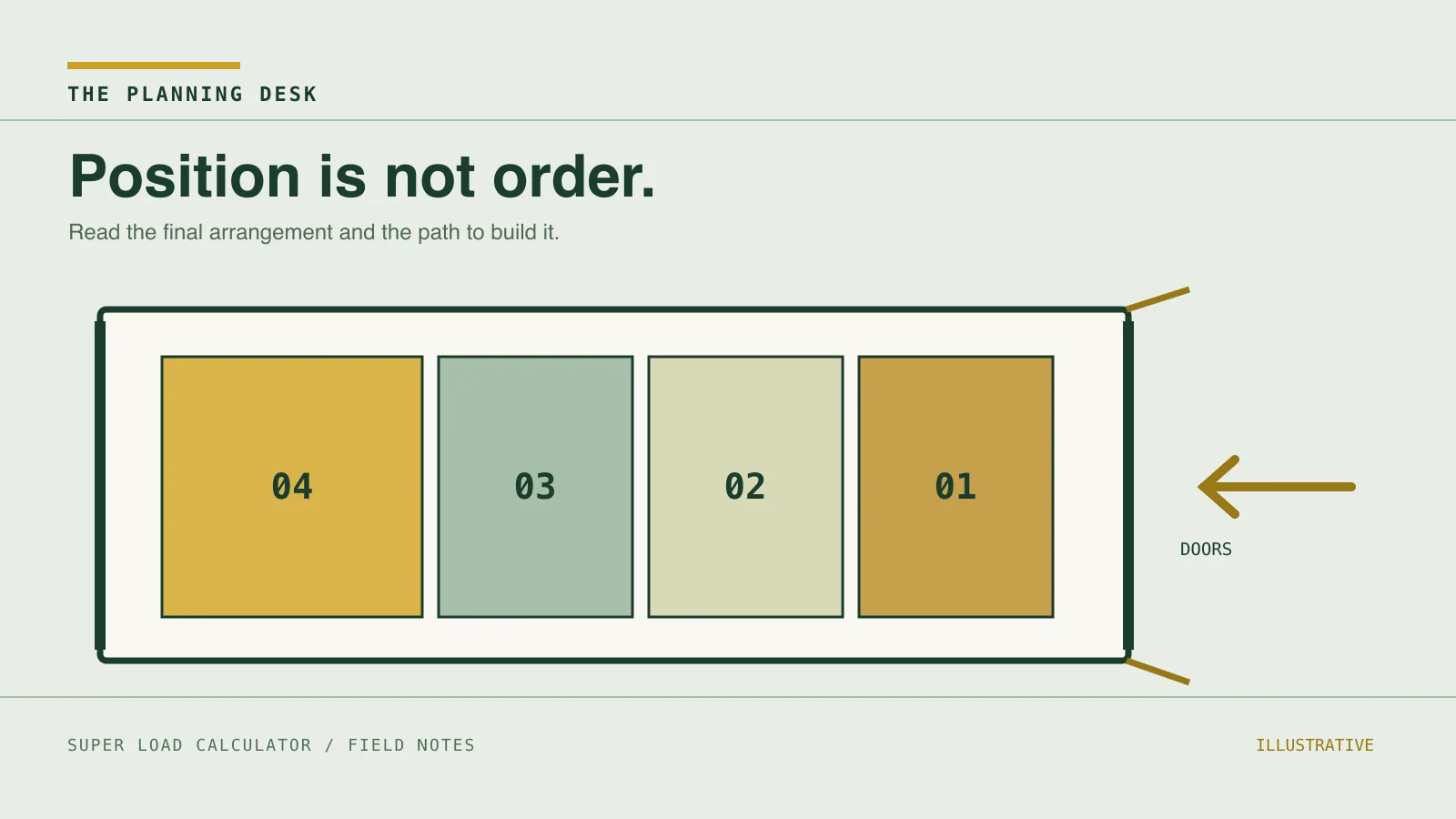
A placement diagram shows where the cargo ends up. The loading team needs to know how it gets there. A plan can look tidy in its final view yet be difficult to execute when an early piece blocks the path for a later one.
Read the plan in two directions
First read it from the front of the unit toward the doors: which items are meant to occupy each part of the floor? Then read it in loading order: which item is brought in first, and can the next item still reach its proposed position? These views answer different questions. A final arrangement alone does not explain the steps the warehouse must take.
What changes when the sequence changes?
Access to the intended position
Imagine a wide crate intended near the front wall and smaller cartons near the doors. If the cartons are loaded first, they may leave too little clear path for the crate to pass. Reversing the order can turn the same final arrangement into a workable loading operation.
Handling equipment and crew movements
A forklift, pallet jack or manual team needs room to approach, place and withdraw. A proposed order should be reviewed against the equipment and loading method actually available at the site. The planner cannot infer every local constraint from dimensions alone.
Unload order and delivery commitments
For multi-stop road work, an item needed first at delivery cannot be buried behind items for later stops without a separate rehandling plan. Even for a single destination, the receiver should know whether access to a particular piece matters on arrival.
“Where does it go?” and “When can it be placed?” belong on the same handover.
Use a sequence as a discussion tool
- Number the proposed steps. Match each number to a cargo type, quantity and position on the plan.
- Walk through the actual doorway. Check the clear opening, approach and handling equipment at each step.
- Record dependencies. Note which piece must be in place before another can be stacked or positioned.
- Recheck the final load. Verify placement, weight distribution and access after any change to quantity or order.
Super Load Calculator shows a proposed 3D arrangement and numbered loading sequence. Read what the planner’s loading sequence includes, then inspect the public container sample’s rendered arrangement alongside its arrangement. Treat them as a shared starting point for the forwarder, warehouse and driver. Confirm the cargo, equipment and site method before loading; blocking, bracing and lashing require a separate check. The IMO/ILO/UNECE CTU Code provides guidance for the wider packing and securing process.
Test the sequence with your cargo.
Enter your cargo details and review the proposed placement and numbered loading order.
Bring the sequence to the dock briefing
Use the Google blog loading-sequence review, read our Medium guide to reviewing the moves, and prepare a five-point Substack dock briefing. Share the LinkedIn loading checklist with the loading team.