
What does CBM mean in shipping?
CBM means cubic metre (m³), a unit of volume used to describe the space occupied by a shipment. It is not a measure of weight or a guarantee that cargo will fit. Include pallets, crates and packaging when recording packed dimensions. See FedEx’s CBM definition.
How many CBM fit in a 20ft container?
Hapag-Lloyd lists 33.2 m³ of cubic capacity for its 20-foot standard container example. That does not mean every shipment of 33.2 CBM can be loaded. Door clearance, packing gaps, handling rules and payload can limit what fits. Equipment varies by manufacturer; check the unit supplied.
Compare 20ft, 40ft and high-cube container volume and payload, then use the container loading calculator for mixed rectangular cargo to inspect a proposed arrangement.
The number that looks decisive
The packing list adds up to less than the container’s stated cubic capacity. It seems to fit. Then someone asks whether the tallest crate will pass through the door.
CBM (cubic metres) tells you the shipment’s combined volume. It does not prove that those shapes can be arranged inside a particular unit under the cargo’s handling rules. A shipment can pass the volume check and still fail at the door or on the floor. A 3D container load plan lets you inspect a proposed arrangement of the actual pieces.
CBM is a screening number. A load plan tests an arrangement. Use both, then confirm the actual cargo and equipment before loading.
A simple example
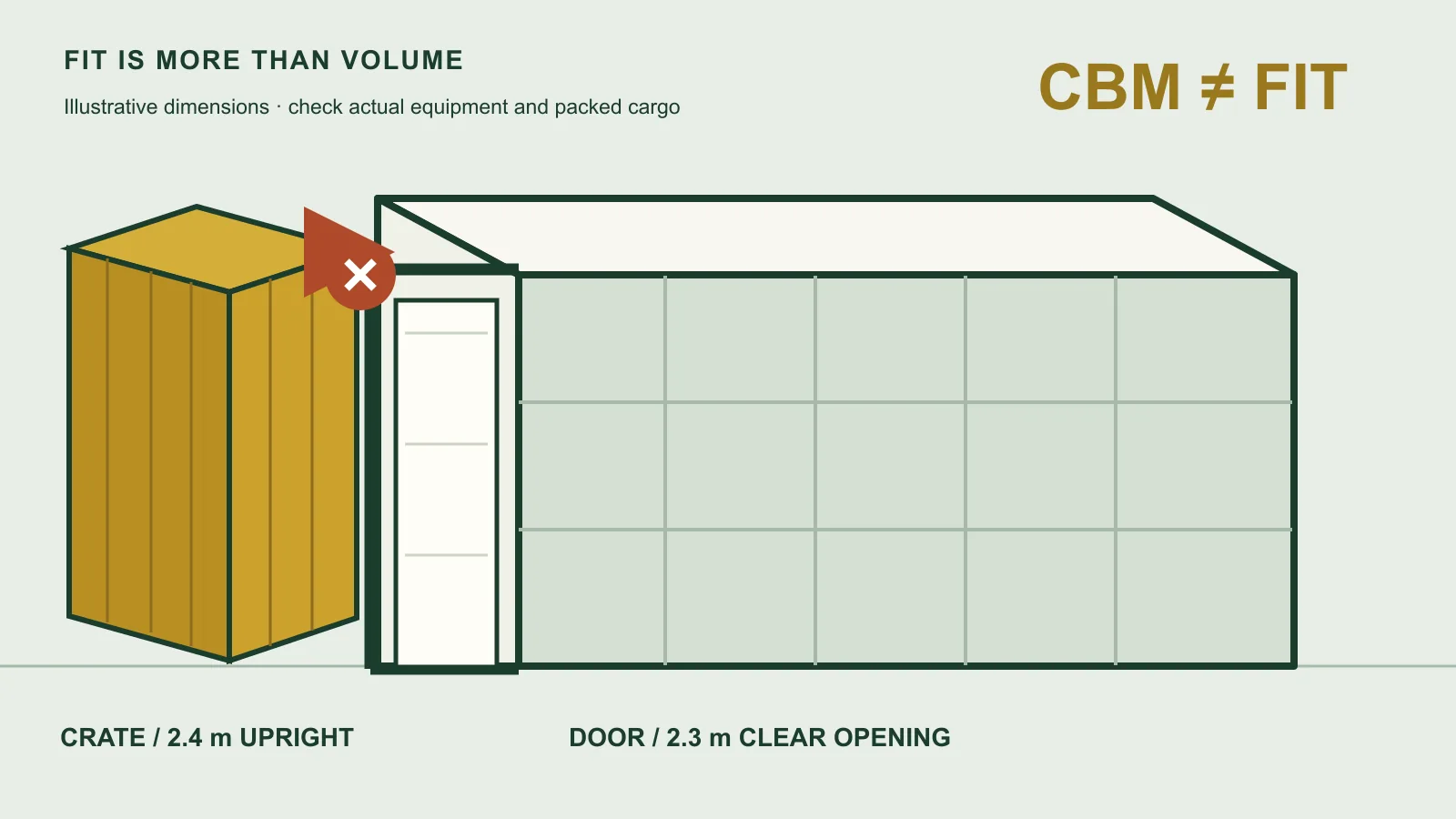
Take a crate that must remain upright and measures 2.4 m high once packed. The proposed container’s clear door opening is 2.3 m. Even if there is unused volume and adequate height farther inside, this crate cannot enter upright through that opening.
Packed crate
2.4 m
Required upright height in this example.
Door opening
2.3 m
Illustrative clear height of the proposed unit.
These figures illustrate the question, not a specification for every container. Measure the packed cargo and check the actual equipment supplied.
What CBM misses
Packaging changes the footprint
A loaded pallet can occupy more room than the cartons measured alone. Include the pallet, wrapping, crate and overhang in the dimensions you enter.
Handling rules change usable space
“Stackable” needs a stated limit. If a box may carry one light layer, that is different from a crate designed to support a heavy pallet. A piece marked “this way up” cannot simply be rotated to make a spreadsheet total work.
Weight and sequence still matter
Payload can become the limit before volume does. The arrangement also needs a loading order that warehouse staff can review and follow. A drawing without a workable handover is incomplete.
Five checks before booking
- Use packed dimensions and gross weights. Include pallets, crates, protection and any overhang.
- Check the actual unit. Compare each piece with the clear door opening, interior dimensions and payload.
- Record the cargo rules. Mark upright, floor-only and non-stackable pieces. Record any allowed top-load weight.
- Review placement and support. Look at where each piece sits; empty volume is not a promise that another item fits.
- Review the loading handover. Check the order and verify the proposal against the cargo and equipment you actually receive.
CBM and a load plan answer different questions. Neither replaces the separate work of securing cargo for transport. The IMO/ILO/UNECE CTU Code is a useful reference for packing and securing cargo transport units.
Try the dimensions before you book
Enter your rectangular cargo, set placement and stacking rules, and review a proposed 3D arrangement, loading sequence and report. Confirm the output against your real cargo, equipment and securing requirements.
Editorial note: Adapted and expanded from Super Load Calculator’s September 2026 article on Substack and Medium. This website edition adds the diagram and five-check guide.
Super Load Calculator makes the planning tool linked above. This guide does not calculate cargo securing.
Take the review to your team
Use the Google blog five-check cargo-fit guide for a practical booking review, or share the LinkedIn cargo-fit checklist with the loading team. Our Medium and Substack editions above offer companion explanations.